
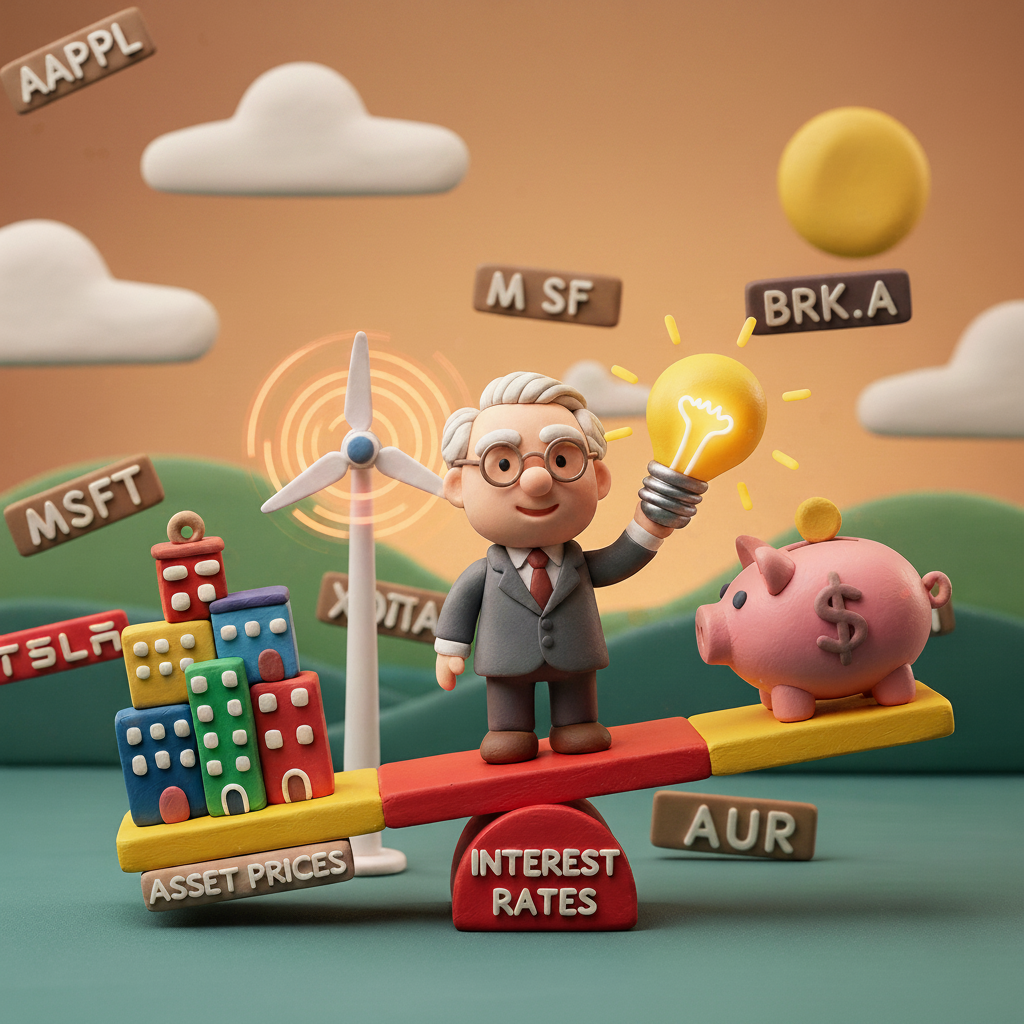
“Interest rates are to asset prices what gravity is to matter.” - Warren Buffett
U.S. markets reached record highs in April, driven by strong corporate earnings and enthusiasm around AI. Investors largely looked past elevated inflation, rising yields, and persistent tensions in the Middle East, marking a sharp reversal from a difficult first quarter.
However, beneath the surface, a more cautious story emerged. The broader economy is slowing, and inflation is proving stubborn. Core measures are easing, but higher energy costs are keeping overall readings above the Federal Reserve's target, leaving policymakers on hold with no clear case to cut or tighten.
Below is a look at how the major indexes performed in April and the key drivers behind the moves.
Major U.S. Stock Indices
Mega-cap technology and semiconductor stocks accounted for most of the index's gains, as investors rewarded companies with clear AI monetization and accelerating profits. Few other sectors kept pace.
That narrowness has raised valuation risks, leaving markets more exposed to any setback in earnings, policy, or geopolitical developments heading into mid-2026.
Overall, in April:
- The S&P 500 climbed 10.42%.
- The Nasdaq 100 rallied 15.64%.
- The Dow Jones Industrial Average gained 7.14%.
Economic and Market Overview
The Macro Backdrop. The U.S. economy remained solid in April but continued to slow, with gross domestic product (GDP) growth tracking at 2% for Q1. Core personal consumption expenditures (PCE) continued to ease gradually, but rising oil prices pushed headline inflation above 3.5%, complicating the case for rate cuts. At its late-April meeting, the Fed held steady and signaled it wants more convincing progress on inflation before easing. Rates are unlikely to come down soon.
The Economy’s Complicated Dynamics. The labor market held steady, with the latest data showing that hiring topped expectations and unemployment changed little. Business investment is increasingly directed toward AI infrastructure and automation, supporting productivity but not widespread growth. Consumer sentiment fell to a record low as households remained focused on the inflation fallout from the Middle East conflict.
Energy, Inflation, and Rates. The tension between rising oil prices and markets’ hopes for rate cuts remained the dominant story in April. Brent crude spiked to $126 per barrel as the conflict between the U.S. and Iran continued to disrupt supply routes through the Strait of Hormuz, pushing headline inflation higher and reducing the likelihood of near-term easing. The 10-year Treasury yield rose above 4.40%, its highest level of the year, as investors reassessed both inflation risk and worries over the U.S. fiscal outlook.
U.S. Stocks and the AI Rally. U.S. equities had an exceptional month. The S&P 500 crossed 7,000 for the first time, finishing April at a record high of 7,209.01. Earnings primarily drove this gain: With only Nvidia's results still to come, Q1 earnings for the Magnificent Seven are expected to grow 45.7% year-over-year on 24.6% higher revenues.
Commodities Rally. Commodities rose broadly, with energy up 7.7% and industrial metals gaining on strong demand linked to data center and AI infrastructure spending. The commodity rally also supported shares of energy and materials companies while putting upward pressure on inflation expectations and Treasury yields.
Keeping Perspective
April brought plenty of market-moving headlines, but the underlying fundamentals of long-term investing continue to hold up—supported by resilient earnings, disciplined capital allocation, and a steady reminder that while narratives shift, the drivers of value creation remain grounded in cash flows, inflation, and the cost of capital.
As always, we're keeping an eye on the market, and we're here to keep you informed about the current financial climate. If you have any questions about your portfolio or would like to talk through these shifts, don’t hesitate to reach out.
IMPORTANT DISCLOSURES
Clare Market Investments, LLC is a registered investment advisor. This material is for informational purposes only. It is not intended as and should not be used to provide investment advice and is not an offer to sell a security or a recommendation to buy a security. The information is derived from sources believed to be reliable and accurate as of the date of this report, but Clare Market has not audited this information to validate accuracy. Further, information may be at a point in time and subject to change. This summary is based exclusively on an analysis of general market conditions and does not speak to the suitability of any specific proposed securities transaction or investment strategy. Judgments or recommendations found in this report may differ materially from what may be presented in a long-term investment plan and are subject to change at any time. This report’s authors will not advise you as to any changes in figures or views found in this report. Investors should consult with their investment advisor to determine the appropriate investment strategy and investment vehicle. Investment decisions should be made based on the investor’s specific financial needs and objectives, goals, time horizon, and risk tolerance. Except for the historical information contained in this report, certain matters are forward-looking statements or projections that are dependent upon risks and uncertainties, including but not limited to such factors and considerations such as general market volatility, global economic risk, geopolitical risk, currency risk and other country-specific factors, fiscal and monetary policy, the level of interest rates, security-specific risks, and historical market segment or sector performance relationships as they relate to the business and economic cycle. See claremarket.com for additional information and disclosures. © 2026 Clare Market Investments, LLC. All Rights Reserved.