
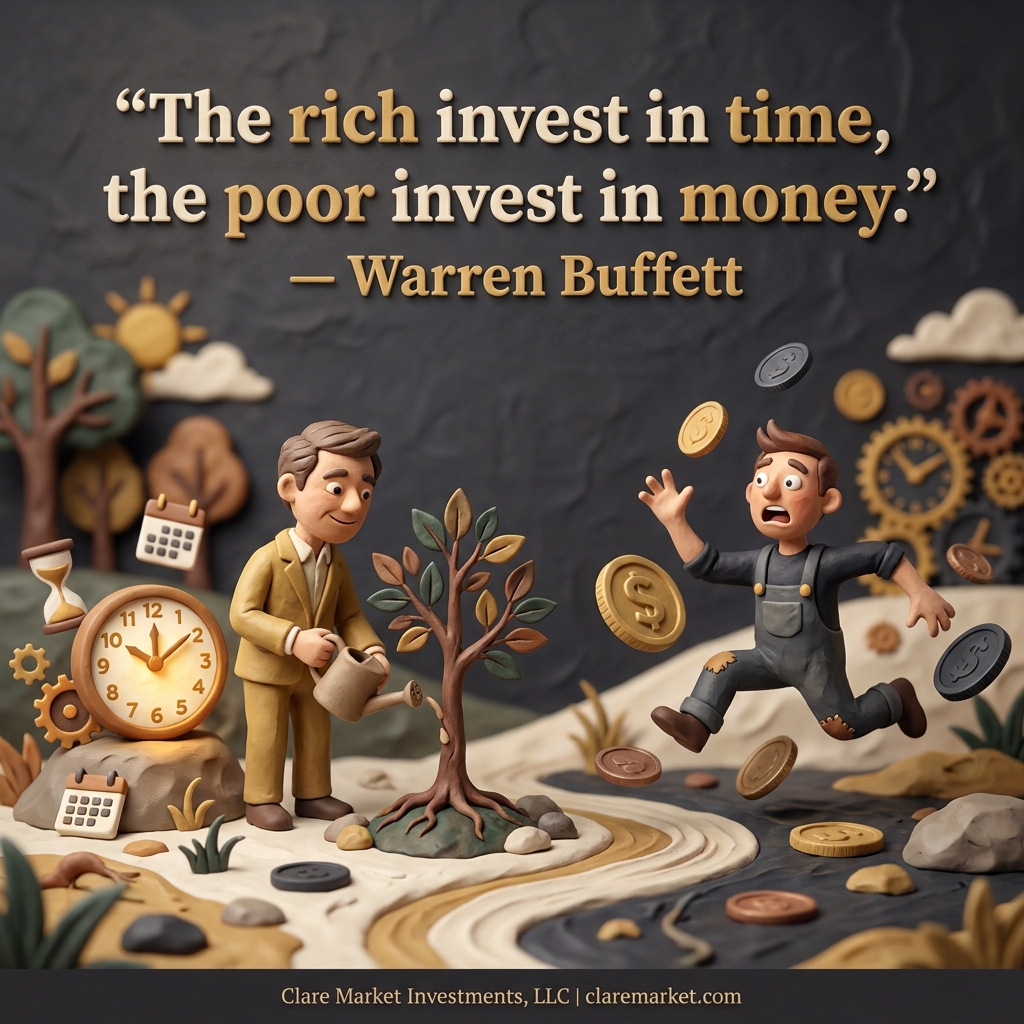
“The rich invest in time, the poor invest in money.” - Warren Buffett
August offered investors a familiar combination of good news, bad news, and plenty of ambiguity.
Inflation remained above the Federal Reserve’s target, Treasury yields stayed elevated, and oil prices swung sharply amid geopolitical tensions. At the same time, softer retail spending and continued weakness in housing suggested that higher borrowing costs are increasingly being felt across the economy.
The economy does not appear to be faltering so much as running at two different speeds. Parts of the service economy remain resilient, while other areas—particularly housing, manufacturing and interest-rate-sensitive consumers—are showing considerably more strain.
That divide, combined with a labor market characterized by relatively little hiring but also few layoffs, complicates the outlook for both economic growth and Federal Reserve policy.
Major U.S. Stock Indexes
Despite the mixed economic backdrop, U.S. equities remained near record levels in August, with technology and AI-related companies continuing to provide significant market leadership.
- The S&P 500 rose approximately 2.7%.
- The Nasdaq-100 gained approximately 4.2%.
- The Dow Jones Industrial Average advanced roughly 1.5%.
Nvidia helped reinforce confidence in the AI investment cycle late in the month, reporting quarterly revenue of $96.2 billion—more than double the prior-year level—as demand for data-center infrastructure remained exceptionally strong.
What Drove the Numbers
The labor market downshifted, but did not collapse.
July payrolls declined by 23,000, while employment gains for May and June were revised lower by a combined 103,000 jobs. Yet unemployment remained relatively low at 4.1%, and layoffs continued to be limited.
The result is an unusual labor environment: companies are reluctant to hire aggressively, but they are also reluctant to let existing workers go. For consumers and investors alike, the question is how long that low-hire, low-fire equilibrium can persist.
Consumers became more selective.
Retail sales fell 0.6% in July, the steepest monthly decline in more than a year. Higher energy costs and a more cautious consumer appear to be weighing on discretionary spending.
Looking ahead, employment, real wage growth and holiday-season guidance from major retailers should provide important clues about the durability of consumer spending.
Housing remained a weak link.
Housing starts fell 12.4% in July, including a 9.9% decline in single-family construction. Building permits, however, increased 5.0%, offering at least one modestly encouraging signal.
Elevated mortgage rates continue to constrain affordability and transaction activity. Few areas of the economy illustrate the impact of higher interest rates as clearly as housing.
Inflation kept policymakers on alert.
Inflation remains above the Federal Reserve’s 2% objective, while higher energy prices have added another layer of uncertainty. Fed officials have continued to emphasize that restoring price stability remains a priority, leaving investors focused closely on each new inflation reading.
That creates a difficult balancing act: policymakers are confronting persistent inflation even as several economically sensitive areas begin to slow.
The Two-Tier Economy
Perhaps the most important takeaway from August is that there is no single description that neatly captures the U.S. economy today.
Technology investment remains strong. AI infrastructure spending continues at an extraordinary pace. Unemployment remains low. Corporate earnings have generally held up.
At the same time, housing is struggling, borrowing costs remain restrictive, portions of the consumer economy are softening, and the labor market has become considerably less dynamic.
Both things can be true.
That is why headline economic numbers alone can sometimes obscure what is happening beneath the surface. The economy may continue growing even while certain industries, households and businesses experience something very different.
What We’re Watching
September brings another important round of employment, inflation and Federal Reserve data. Higher borrowing costs remain one of the more important risks to monitor. They affect housing directly, increase financing costs for businesses, and can place pressure on the valuations of long-duration growth assets.
We are also watching whether the economic benefits of the AI investment cycle begin to broaden. Nvidia’s results confirmed that infrastructure spending remains robust. The next question is whether the resulting earnings and cash-flow growth increasingly extends beyond a relatively small group of semiconductors and hyperscale technology companies into software, networking, utilities, power infrastructure, industrials and other areas of the economy.
For long-term investors, periods like this remind us that markets and economies rarely move in straight lines—or all at the same speed.
As always, if developments in the markets or economy raise questions about your own portfolio, we’re here to help. Making sense of the noise and keeping the focus on your long-term objectives is exactly what we’re here to do.